₿ BITCOIN47.COM
US Strategic Bitcoin Reserve: What It Means
Factual context on the US Strategic Bitcoin Reserve — legislative history, current status, arguments for and against, and global implications.
We are not affiliated with, endorsed by, or sponsored by Donald Trump, any campaign, or any government body. This page provides neutral editorial context about publicly documented policy proposals. Nothing here is investment advice.
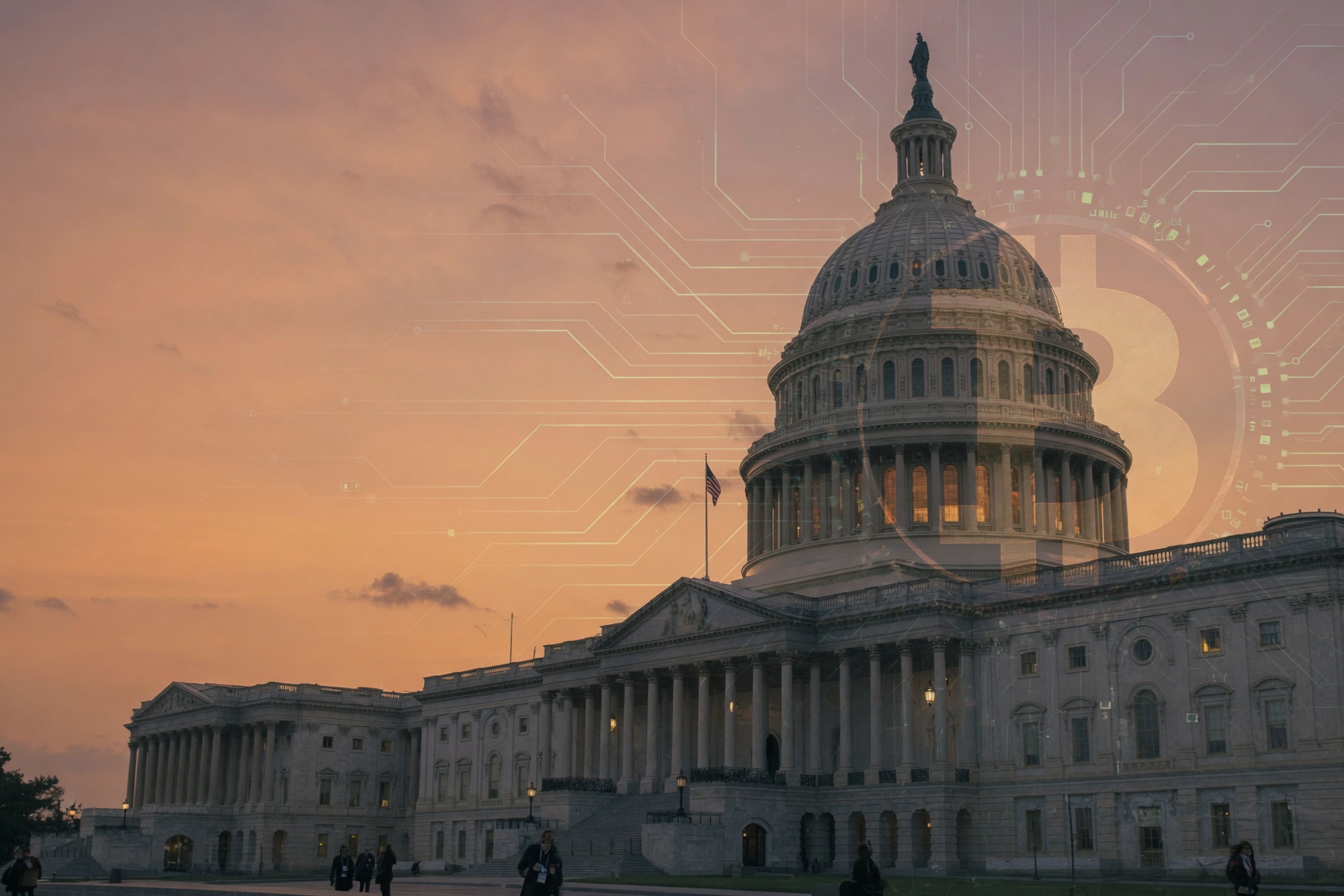
What a Strategic Bitcoin Reserve Would Mean
A Strategic Bitcoin Reserve (SBR) is a proposal for the United States federal government to hold Bitcoin as a national reserve asset — analogous in concept to the US Strategic Petroleum Reserve (oil) or the gold reserves held at Fort Knox.
The core argument: Bitcoin's fixed 21 million supply cap, its independence from any single government's monetary policy, and its status as a globally liquid digital bearer asset make it a suitable long-term reserve diversification vehicle for a nation whose reserve currency (the US dollar) is subject to structural debasement.
Legislative History
The BITCOIN Act (Lummis, 2024–2025)
Senator Cynthia Lummis (R-WY) introduced the Boosting Innovation, Technology, and Competitiveness through Optimized Investment Nationwide (BITCOIN) Act in July 2024, with a revised version introduced in early 2025.
Key provisions:
- Direct the US Treasury to acquire 1 million Bitcoin over five years
- Hold for a minimum of 20 years
- Fund acquisitions through revaluation of existing Federal Reserve gold certificates and proceeds from selling certain Fed assets
- Establish secure custody infrastructure (air-gapped cold storage)
The bill drew explicit parallels to gold reserve policy and framed Bitcoin as the "digital gold" equivalent for the 21st century. Lummis argued that at Bitcoin's 2024 price, the 1 million BTC acquisition would cost approximately $70 billion — representing approximately 5% of total supply.
Status: As of 2026, the BITCOIN Act has not passed. It has been referred to committee and lacks the Senate majority required for passage. However, it has elevated the SBR concept from fringe to mainstream policy debate.
Executive Order — January 2025
The 47th administration issued an executive order directing the President's Working Group on Digital Asset Markets to study the feasibility of a national digital asset stockpile, including Bitcoin. This was the first time a US administration had formally tasked a government body with evaluating Bitcoin as a national reserve asset.
The order did not direct any Bitcoin purchases. It established a working group charged with producing a policy recommendation within 180 days. The working group's report and its recommendations were not publicly released in full as of mid-2026 — verify current status at whitehouse.gov or congress.gov.
The Gold Comparison
The US holds approximately 8,133 tonnes of gold in national reserves — the largest gold reserve of any country. Gold represents approximately $500 billion in value at 2024 prices. The Federal Reserve values this gold at a statutory rate of $42.22/oz (the 1973 Bretton Woods remnant), far below market value.
The Lummis proposal would fund Bitcoin acquisition partly through revaluing these gold certificates to market — a balance sheet maneuver that would create headroom to acquire Bitcoin without new Congressional appropriation.
| Asset | US Reserve | Value (approx.) | Properties |
|---|---|---|---|
| Gold | 8,133 tonnes | ~$500B | Physical, sovereign, ~2% annual new supply |
| Bitcoin | 0 (proposed: 1M BTC) | — | Digital bearer, 21M cap, 3.125 BTC/block new |
| Oil (SPR) | ~370M barrels | ~$30B | Consumable, strategic, operationally complex |
The comparison highlights both the argument (Bitcoin's scarcity and bearer properties are superior to gold in key respects) and the counterargument (Bitcoin's volatility vs. gold's 5,000-year track record as a monetary asset).
Arguments For the Strategic Reserve
Dollar diversification. The US holds approximately $750 billion in foreign exchange reserves (primarily US Treasuries held offshore). Bitcoin offers non-correlated exposure with a hard supply cap — a hedge against dollar debasement the US itself is creating.
First-mover advantage. If other nations accumulate Bitcoin as a reserve asset (El Salvador has; Bhutan has mined and holds Bitcoin; others are reportedly accumulating), the US waiting could mean paying significantly higher prices later.
Signal effect. Federal ownership would send a signal that Bitcoin is a recognized long-term monetary asset — potentially stabilizing price volatility over time as the US government becomes an indefinite holder.
Seizure inventory. The US government already holds approximately 200,000+ BTC seized in law enforcement actions (Silk Road, Bitfinex hack, etc.). The SBR framework could formalize holding this inventory rather than auctioning it.
Arguments Against the Strategic Reserve
Volatility risk. Bitcoin has experienced 80%+ peak-to-trough drawdowns multiple times. A government institution holding a volatile asset at scale creates political liability and potential balance sheet instability.
Credibility of the dollar. Some economists argue that US government Bitcoin accumulation signals lack of confidence in the dollar — the very currency the US must maintain credibility in as global reserve issuer.
Custody and security. The US government's ability to maintain secure, air-gapped custody of significant Bitcoin holdings without leakage or loss is unproven. The stakes of a key management failure are permanent and irreversible.
Legal and accounting complexity. Bitcoin doesn't fit neatly into existing federal accounting frameworks for reserve assets. The statutory and regulatory complexity of establishing, auditing, and reporting a Bitcoin reserve is significant.
Current Status (2026)
As publicly documented:
- The executive working group established in January 2025 has been operational
- The BITCOIN Act remains in committee; no Senate floor vote as of mid-2026
- The US government continues to hold seized Bitcoin through the US Marshals Service and DOJ
- No confirmed acquisitions of Bitcoin for reserve purposes have been publicly announced
- Several US states have introduced or passed legislation allowing state pension funds to allocate to Bitcoin ETFs
Verify current status at: congress.gov (search "BITCOIN Act"), whitehouse.gov (executive orders), and sec.gov (regulatory developments).
Global Context
The SBR proposal does not exist in isolation. Other nations and institutional actors are watching:
- El Salvador — Holds ~6,000 BTC in national treasury; established a National Bitcoin Office
- Bhutan — Royal Government has mined and holds Bitcoin; estimated holdings ~12,000+ BTC as of 2024
- UAE, Saudi Arabia, Qatar — Sovereign wealth funds have made indirect Bitcoin allocations via ETFs
- Russia, Iran — Have reportedly used Bitcoin for international settlement to circumvent sanctions
- China — Banned retail Bitcoin trading (2021) but holds significant seized BTC; may hold state mining capacity
→ Full context: Global Bitcoin Politics →
Books for Understanding the Policy Context
Saifedean Ammous — The foundational argument for Bitcoin as sound money and global reserve asset. Chapter on gold standard and Bitcoin as its digital successor is directly relevant to SBR debates.
Amazon →G. Edward Griffin — History of the Federal Reserve's creation and structure. Essential background for understanding the institutions the SBR proposal would interact with.
Amazon →Lyn Alden — Why fiat monetary systems are structurally fragile and why fixed-supply assets matter. The best macro framework for understanding the dollar context the SBR proposal responds to.
Amazon →Ray Dalio — Reserve currency cycles and the rise and fall of empires. The big-picture framework for understanding why the US might consider diversifying reserve assets.
Amazon →US gold reserve history and policy — understanding the existing framework helps evaluate SBR proposals by analogy.
Amazon →Understanding what a president can and cannot direct Treasury and the Fed to do — relevant to evaluating what the executive order framework can actually achieve without Congressional action.
Amazon →Verify all policy information from primary sources: congress.gov, whitehouse.gov, sec.gov. This page is editorial context only, not investment advice. Not affiliated with any political figure or campaign.
Contains Amazon affiliate links — we earn commissions on qualifying purchases at no extra cost to you. Not affiliated with Donald Trump, any campaign, or any government office. Full disclosure →