₿ BITCOIN47.COM
The Lightning Network: Bitcoin's Payment Layer
How the Lightning Network works, why it matters for Bitcoin as everyday money, and how it relates to Bitcoin's base layer security.
Bitcoin's Two-Layer Architecture
Bitcoin was designed first and foremost as a store of value and settlement system — a base layer of absolute security and finality. But for everyday payments, the base layer has practical limitations: blocks are produced every ~10 minutes, and at most ~7 transactions per second globally.
The Lightning Network solves this without changing Bitcoin's base layer. It is a payment channel network built on top of Bitcoin — a Layer 2 that enables:
- Instant payments — settled in milliseconds, not 10 minutes
- Near-zero fees — fractions of a cent per transaction
- Micropayments — amounts too small for on-chain Bitcoin transactions (a single satoshi, if needed)
- Privacy — Lightning transactions are not individually recorded on the public blockchain
The Lightning Network does not compete with Bitcoin. It extends Bitcoin's utility while relying entirely on Bitcoin's base layer for security.
How Payment Channels Work
The Lightning Network is built from payment channels — two-party agreements secured by Bitcoin on the base layer.
Opening a Channel
Alice wants to transact frequently with Bob. They each commit some Bitcoin to a shared transaction on the blockchain — a 2-of-2 multisignature address. This on-chain transaction "opens" their payment channel. Once opened, the channel stays open indefinitely.
Transacting Off-Chain
Now Alice can send Bob Bitcoin instantly — thousands of times — without any new on-chain transactions. Each payment updates an internal balance sheet that both parties hold. The channel's current state (who holds how much Bitcoin) is always valid, signed by both parties, and can be submitted to the blockchain at any time.
Routing Through the Network
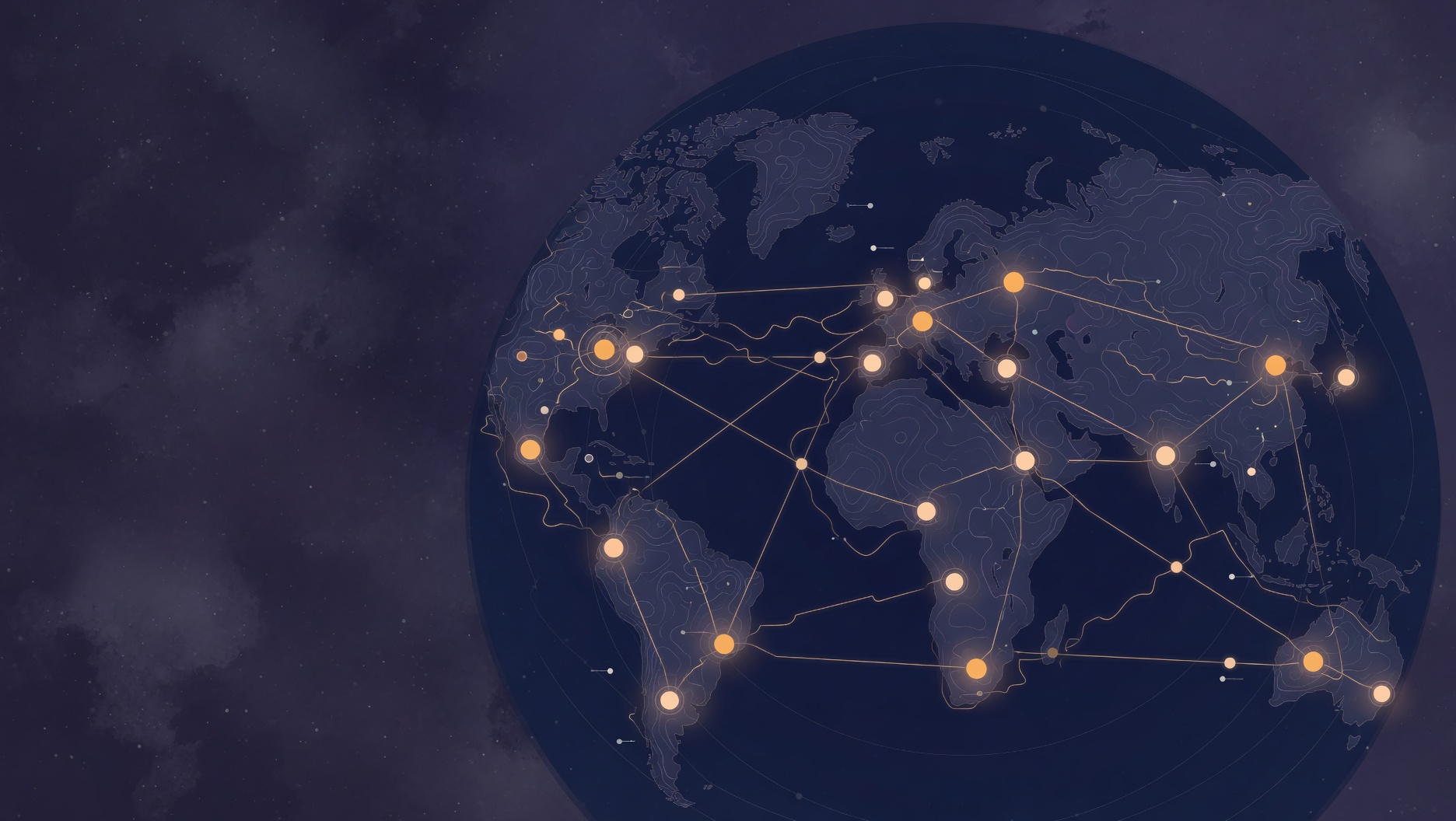
Alice doesn't need a direct channel with every person she wants to pay. If Alice has a channel with Bob, and Bob has a channel with Carol, Alice can pay Carol by routing through Bob. Lightning automatically finds the best route across the network. This creates a global network of payment channels where any two participants can transact through a path of intermediaries — without any intermediary being able to steal funds.
Closing a Channel
When Alice and Bob are done transacting, either party can close the channel by submitting the final balance state to the blockchain. The Bitcoin is settled on-chain in the correct proportions. The whole session of thousands of transactions requires only two on-chain transactions — the open and the close.
What Lightning Enables
Coffee-Level Payments
On Bitcoin's base layer, transaction fees vary with network congestion — often $1-$5 or more during busy periods. Paying for a $4 coffee on-chain is economically impractical. Lightning fees are typically 1-10 satoshis — fractions of a cent — making micropayments genuinely viable.
Streaming Money
Lightning's speed and low cost enable entirely new payment primitives that are impossible with traditional banking. Developers have built applications that "stream" Bitcoin by the second — paying content creators by the minute of content consumed, paying for API calls by the request, or receiving wages that accumulate in real time rather than once a month.
Global Remittances
Sending $100 from the US to El Salvador through traditional channels costs $5-$15 and takes 2-3 business days. Via Lightning, it costs a fraction of a cent and arrives in seconds. For the 1.7 billion unbanked adults globally, Lightning represents access to near-zero-cost financial infrastructure for the first time.
El Salvador's Bet
El Salvador made Bitcoin legal tender in 2021 and launched the Chivo Wallet — a Lightning-enabled payment app distributed to the national population. The experiment has been mixed in terms of adoption, but it demonstrated that Lightning-based payments work at national scale. The Lightning Network enabled a sovereign nation to implement a viable digital payment system on top of Bitcoin.
Lightning and Bitcoin's Base Layer
Lightning Does Not Weaken Bitcoin
A common misconception: if Lightning allows off-chain transactions, does this undermine Bitcoin's transparency and security?
No. Lightning transactions are:
- Secured by Bitcoin on-chain. Channel balances are Bitcoin. The settlement is Bitcoin. At any point, either party can close the channel and settle on-chain.
- Enforceable. If Bob tries to cheat by submitting an old channel state (claiming more Bitcoin than he actually has), Alice can submit a "penalty transaction" that takes all the Bitcoin in the channel. Cheating is economically irrational.
- Not held by intermediaries. Routing nodes cannot steal funds — the cryptographic structure of HTLC (Hash Time Locked Contracts) ensures that each hop in a payment route can only succeed or fail, never steal.
Lightning Increases Base Layer Demand
Counterintuitively, Lightning creates demand for base-layer Bitcoin transactions, not less. Opening and closing Lightning channels requires on-chain transactions. As Lightning grows, the demand for secure, settled Bitcoin on-chain grows with it.
The Current State of Lightning (2026)
The Lightning Network has matured significantly from its 2018 launch. As of 2026:
- Thousands of nodes operate globally, many of which route payments for others
- Major exchanges (Strike, Kraken, OKX, and others) support Lightning deposits and withdrawals
- Wallet support is mainstream — Wallet of Satoshi, Phoenix, Breez, and others offer user-friendly Lightning wallets on mobile
- BTCPay Server enables merchants to accept Lightning payments without a third-party processor
- LNURL and BOLT12 protocols have standardized the experience, making Lightning as simple as scanning a QR code
Limitations and Open Problems
Lightning is real and useful today. It also has genuine limitations:
- Channel liquidity management — routing nodes must balance liquidity across channels; this creates operational complexity
- Offline receiving — a standard Lightning wallet cannot receive payments while offline (solutions like LSPs — Lightning Service Providers — address this)
- Large payments — very large payments are harder to route through Lightning due to channel capacity limits; on-chain is still better for $100K+ single transactions
- Watchtowers — users who close their wallet for extended periods need "watchtower" services to monitor for cheating attempts
These are engineering problems being actively worked on, not fundamental flaws.
How to Use Lightning
Getting Started
Most new Bitcoin holders do not need Lightning immediately. Base-layer Bitcoin is the right starting point for learning self-custody and accumulating a long-term position.
When you're ready to explore Lightning:
- Mobile Lightning wallets: Wallet of Satoshi (custodial, simplest), Phoenix Wallet (self-custodial, excellent UX), Breez (self-custodial)
- Self-hosted Lightning: Run your own Lightning node on a Raspberry Pi using software like Umbrel, Start9, or Raspiblitz
- Strike: A popular US app that makes Bitcoin and Lightning accessible alongside traditional bank accounts
Lightning wallets involve online "hot" Bitcoin — smaller amounts suitable for everyday payments. Keep the majority of your Bitcoin stack in cold hardware wallet storage. Lightning is for spending; hardware wallets are for saving.
Lightning in the Context of Bitcoin's Future
Bitcoin's long-term security depends on transaction fees, since the block subsidy (new Bitcoin created per block) will eventually approach zero. A healthy Lightning Network drives more on-chain traffic as channels open and close — creating a sustainable fee market for base-layer security.
Lightning also demonstrates something important: Bitcoin can scale without changing its core protocol. The base layer does not need to become faster or more centralized to handle global payment volume. Layer 2 solutions can carry the transaction load while the base layer remains a maximally secure settlement system.
This is the architecture: Bitcoin as digital gold at the base layer, Lightning as digital cash on Layer 2.
Cross-References
Understanding Lightning requires understanding Bitcoin's base layer — fixed supply, proof-of-work, and the UTXO model.
Read →Lightning wallets are hot wallets — understand the security model before moving Bitcoin to Lightning channels.
Read →El Salvador's Lightning adoption, remittance corridors, and how Lightning is enabling financial access in emerging markets.
Read →Network metrics including Lightning Network capacity trends alongside base-layer hash rate and transaction data.
Read →Contains Amazon affiliate links — we earn commissions on qualifying purchases at no extra cost to you. Not affiliated with Donald Trump, any campaign, or any government office. Full disclosure →